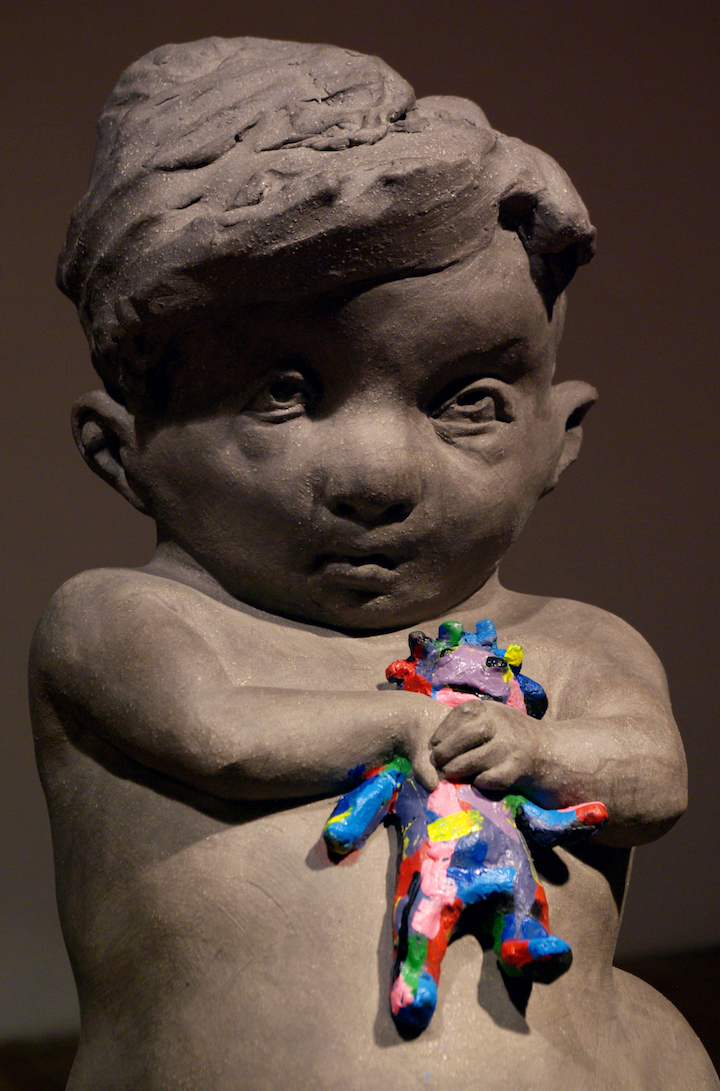
Age of Innocence describes a short-lived period of childhood in which we are sheltered from the greed, corruption and moral laxity of the adult world. Reflecting on this stage of our adolescent development, the sculptor anne drew potter recreates contemporary allegories, illustrating narrative works that describe for us the way history has been interpreted by giving meaning to the abstract complexities of moral, spiritual and political learning. Through contemporary sculpture the artist creates scenes that combine fairytale-like characters and historical references to real life icons of modern history (such as Anne Frank and Shirley Temple as well as the visual personifications of wealth, greed and poverty).
The tradition of visual allegory predates literacy and has been used throughout art history to illustrate lessons or parables that have existed as examples of ethical behaviour in a just society for centuries. From the works of anne drew potter we recognize the power that allegory and popular culture takes in the construction of historical power. How is it that with such complicated historical and political agendas, that we distinguish between what is right and what is wrong when the answer is never so obvious. How might we stand on the right side of history?
In Age of Innocence, lessons learned from contemporary depictions of the past, can lead to meaningful reconciliation and expose the manipulation of historical truth. It is now more important than ever to acknowledge the power that dominant narratives and visual culture have on our understandings of the present. It is no longer possible for us to be willfully ignorant of the historical narratives that were developed to support systemic power, and the social inequities that shape our cultural imagination, both in the past and in the present.
This exhibition was guest curated by Derrick Chang
Image credit: ‘Ungrouped: Do you have what I want, Do I want what you have?’ (detail) by anne drew potter